Projects

A selection of research and applied AI projects across speech, interactive systems, generative tools, and Bayesian NLP. Each project summary focuses on the problem, the approach, and the outcome.

Interactive 3D view of the 10,000 word dataset.

NLP Visualization2026

Word Embedding Explorer

Interactive Explainer

Open page

A 3D interactive journey into the semantic vector space of language, visualizing 10,000 words from Google News.

Problem

High-dimensional vector spaces are mathematically elegant but intuitively opaque. Understanding how "king - man + woman = queen" works requires seeing the geometry.

Approach

Projected 300-dimensional Word2Vec embeddings down to 3D using Principal Component Analysis (PCA) and built a GPU-accelerated interactive viewer to explore semantic clusters.

Impact

  • Visualizes semantic relationships (e.g. countries, emotions, tools) as physical clusters.
  • Makes abstract NLP concepts like "cosine similarity" tangible and navigable.
NLPWord2VecThree.jsDimensionality ReductionInteractive
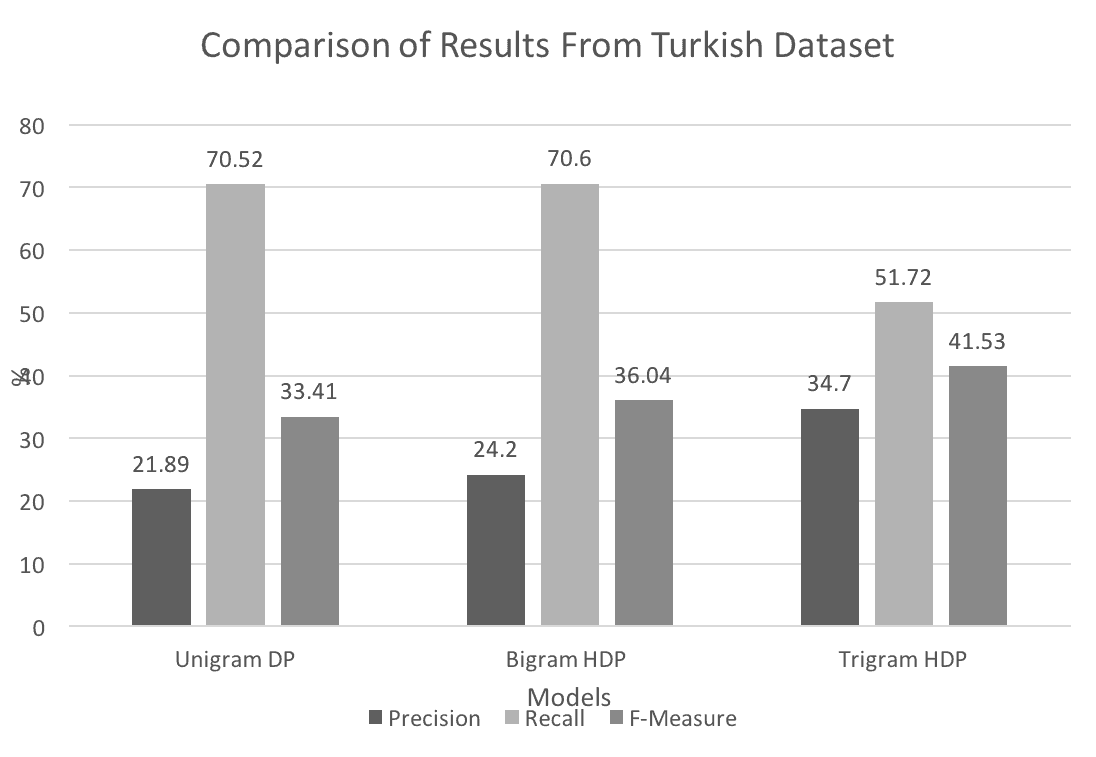
Turkish segmentation benchmark chart used in the MorphoSeg CRP/HDP explorer.

Bayesian NLP Education2026

MorphoSeg CRP/HDP Explorer

Interactive Explainer

Open page

An interactive explainer that turns Bayesian morphology from abstract notation into a walkable, testable story across English, Finnish, and Turkish.

Problem

Bayesian non-parametric morphology can feel like a black box of symbols unless you can watch the generative process unfold in front of you.

Approach

Reframed CRP and HDP as a live story of reuse, novelty, and segmentation, then paired that intuition with runnable train/test experiments on project datasets.

Impact

  • Lets visitors move from metaphor to measurable results without leaving the page.
  • Bridges paper-level theory and reproducible interaction in the same learning flow.
Dirichlet ProcessHDPMorphological SegmentationEvaluationInteractive
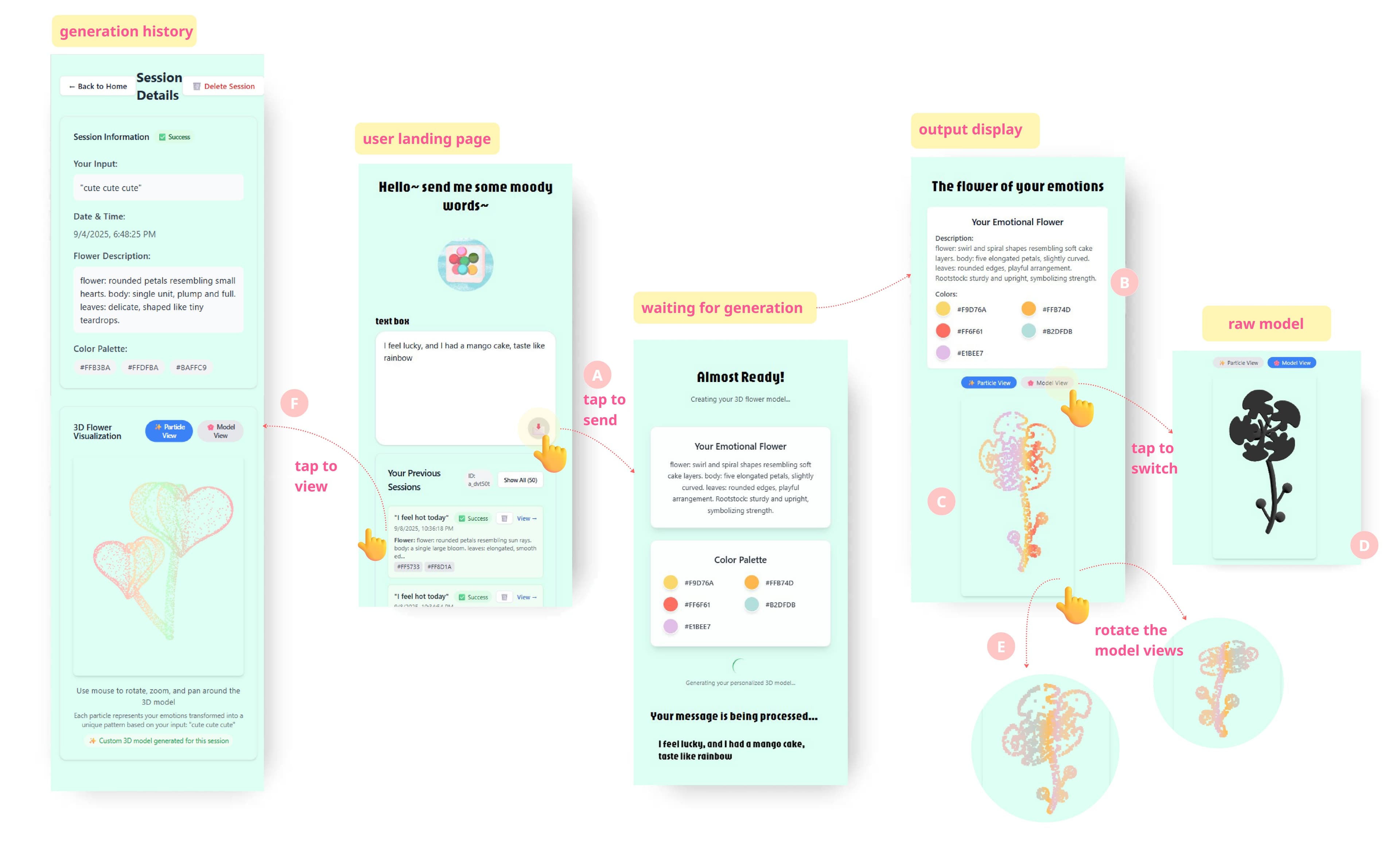
SeaSense user interface for writing emotion prompts.

Generative AI + Wellbeing2024

SeaSense

Deployed Installation

Demo

Turns written emotions into AI-grown 3D flowers, transforming a public screen into a shared emotional garden.

Problem

Most emotion technologies flatten feelings into rigid labels, even though emotion behaves more like weather than a dropdown menu.

Approach

Used an LLM as an interpreter between human language and a 3D generation pipeline, then staged the result as a live Unity installation for collective reflection.

Impact

  • Deployed as a weeklong campus exhibition with 300+ passersby contributing to the shared canvas.
  • Follow-up studies showed AI co-creation increased curiosity and the depth of emotional reflection.
GenAIEmotion AI3D PipelineUnityHuman-Computer Interaction
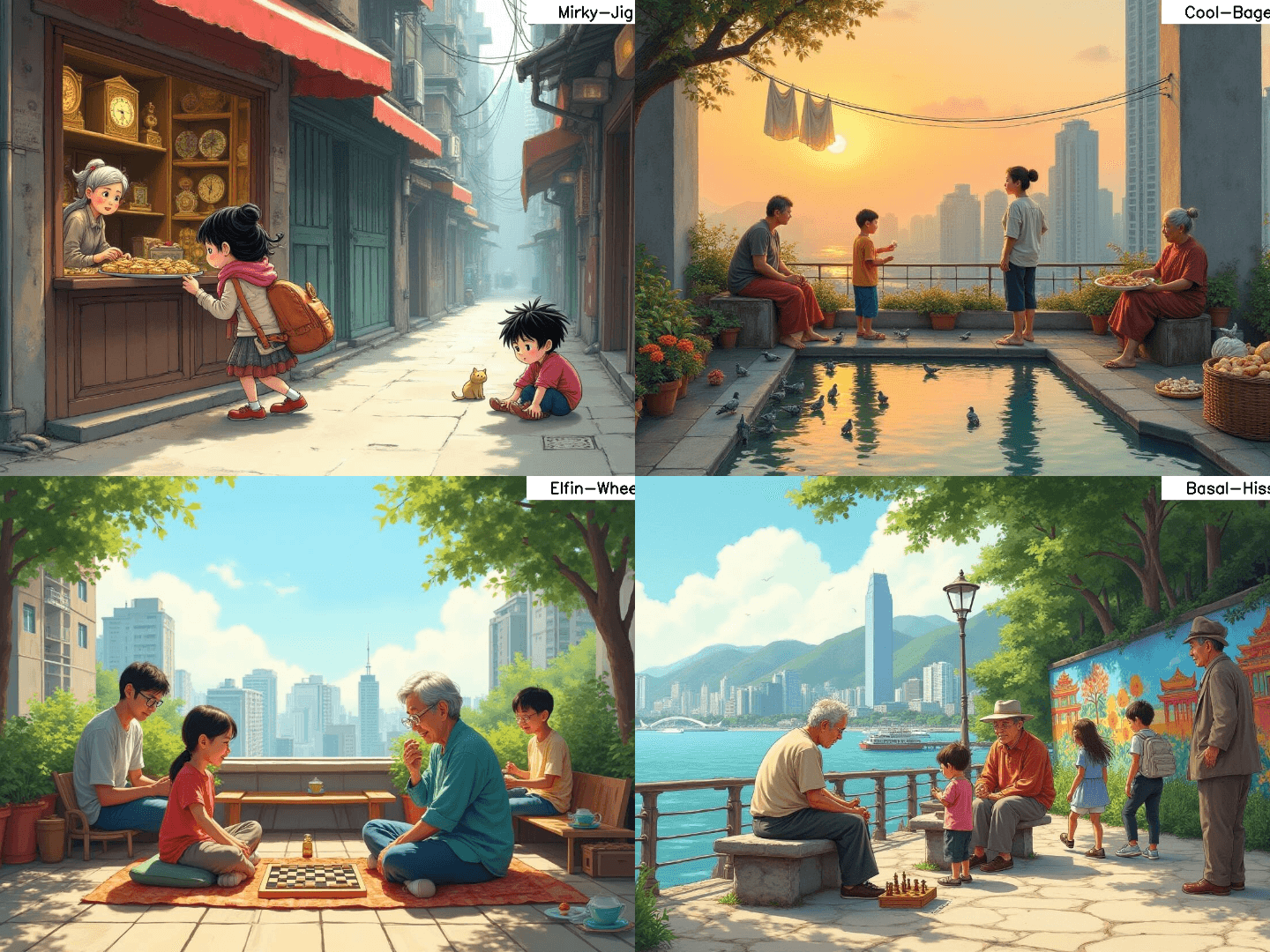
HK-GenSpeech example image collage for prompting participants.

Healthcare AI + Speech2023

AlzDetect (HK-GenSpeech)

Research Prototype

Demo

Reimagines dementia screening as a richer conversation, using culturally local image prompts and speech modeling to estimate cognitive scores.

Problem

Traditional single-image speech tasks are like asking every patient to walk through the same narrow doorway, which limits expression and creates repetition fatigue.

Approach

Generated localized stimulus images and modeled recorded speech with Wav2Vec2 so screening could capture more natural language without sacrificing evaluation rigor.

Impact

  • Collected 423 speech descriptions from 141 Cantonese speakers aged 55-94.
  • AI-generated prompts matched baseline reliability while mixed stimuli reduced prediction error.
Speech AIWav2Vec2Clinical NLPEvaluationGenAI
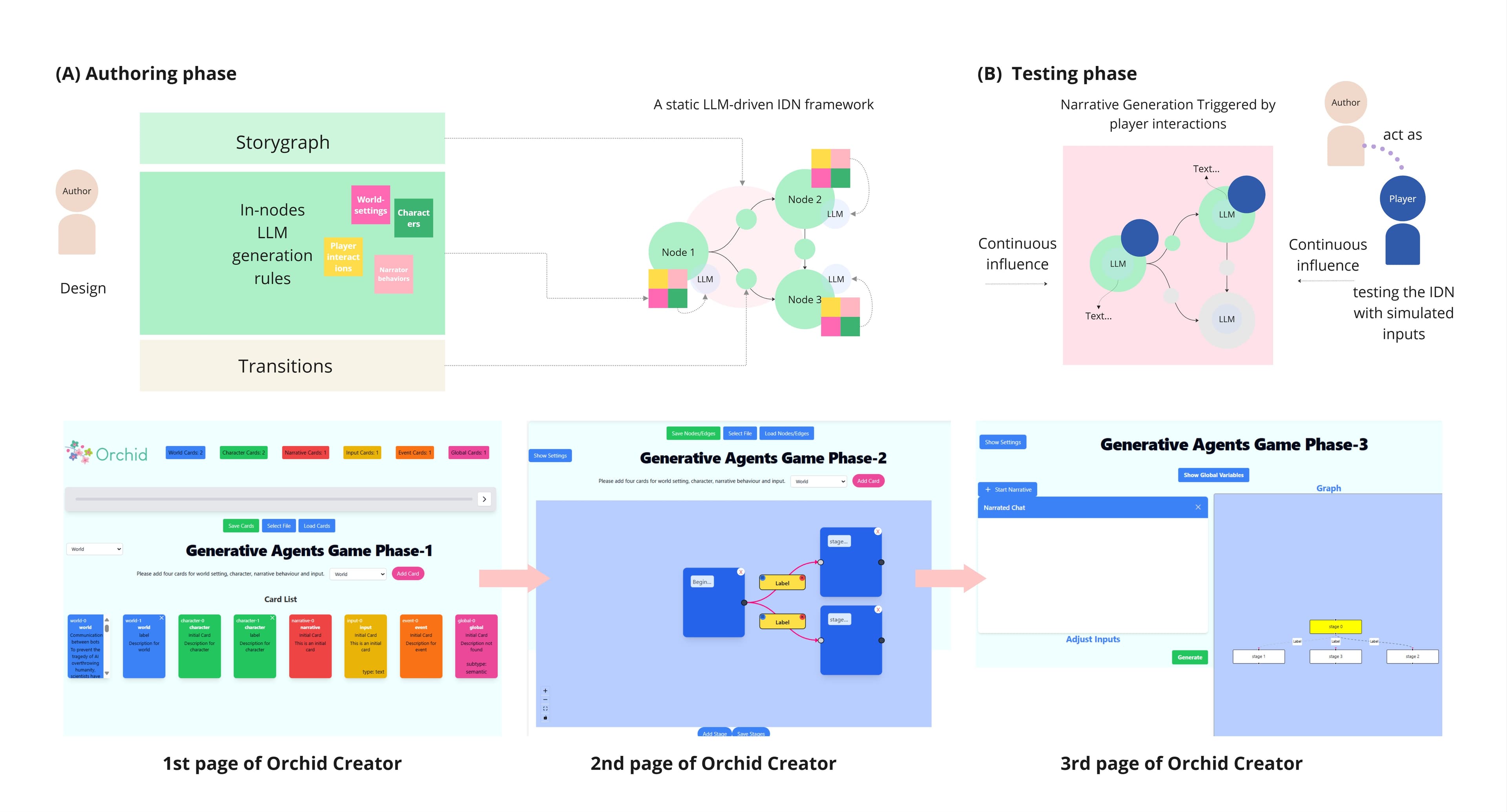
Orchid teaser showing the narrative authoring workflow.

Interactive Narrative + LLMs2022

Orchid Narrative System

Research Prototype

Demo

A graph-based authoring environment that lets LLM-driven stories grow freely while still climbing a deliberate narrative trellis.

Problem

Purely open-ended LLM storytelling can sprawl like ivy without a frame, drifting away from author intent and becoming difficult to test.

Approach

Split authoring into cards, blueprint graphs, and simulation tooling so creators could shape branching stories without surrendering structure.

Impact

  • Validated with narrative designers and creator-player comparisons in structured studies.
  • Showed stronger branching control than open-ended baselines while remaining usable for newcomers.
LLMNarrative DesignAuthoring ToolsPrompt EngineeringUX Research
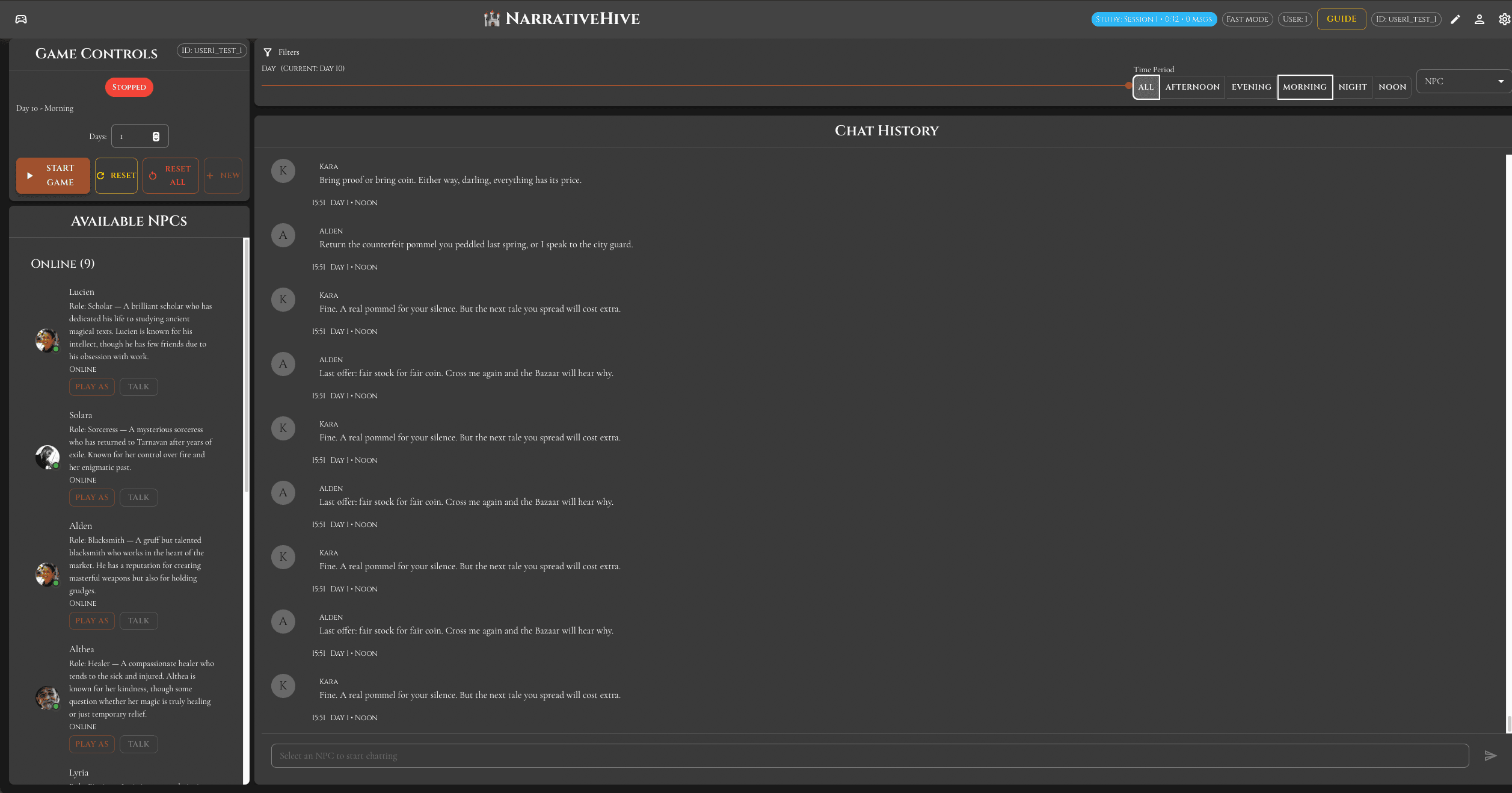
Narrative Hive main screen with timeline and controls.

Multi-Agent Systems + Storytelling2021

Narrative Hive

Research Prototype

Demo

A multiplayer storytelling world where humans and AI characters improvise together, but with enough memory and governance to keep the society coherent.

Problem

Collaborative narrative systems collapse when improvisation outruns memory, social logic, or continuity.

Approach

Built the platform like a small society: lifecycle, scheduling, memory, and reputation agents working underneath an LLM dialogue layer on commodity hardware.

Impact

  • User studies showed reputation improved perceived naturalness and trust.
  • Engagement ranged from light participants to users driving 100+ turns per session set.
Multi-AgentLLMRAG/MemoryGame SystemsEvaluation